When an inspection asks about the CE marking on a medical device, the answer that almost never convinces is "it's got one, look". Because CE marking is not a quality seal or a "this is good" label: it is a declaration by the manufacturer that the product complies with Regulation (EU) 2017/745. What lies behind it changes a lot depending on the class, and part of it is yours to check.

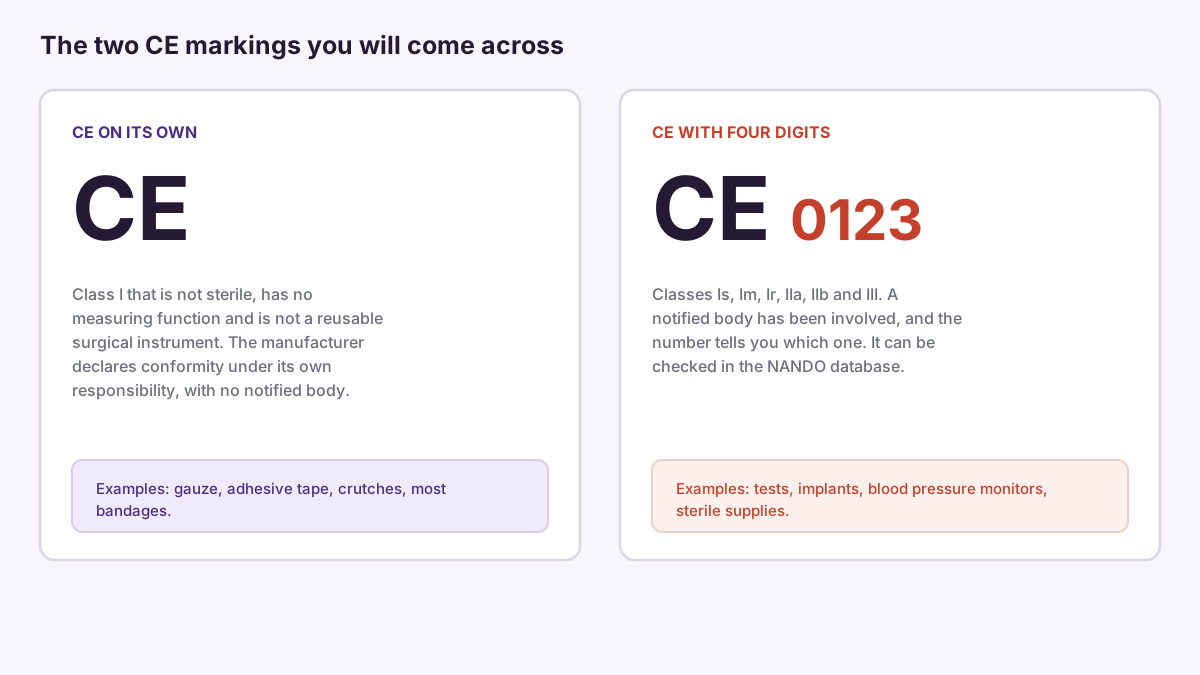
The four-digit number tells you almost everything
The number that appears below or next to the CE logo is the identification number of the notified body involved in the conformity assessment. And that is where the first useful check lies:
- CE without a number: the manufacturer has self-certified. That is normal for class I devices that are not sterile, have no measuring function and are not reusable surgical instruments.
- CE with a number: a third party has been involved. You can search for that number in the European Commission's NANDO database, which shows the body's name, country and what it is designated for.
If a product that by its nature should involve a notified body (a self-test, an implant, something sterile) carries the CE marking on its own, that is not a printing oversight. It is a red flag.
And the other way round: a CE marking with a number does not mean the body has tested that particular product. It means it has assessed the manufacturer's quality system and, depending on the class, the technical documentation. It is not the same thing.
Why the class matters so much

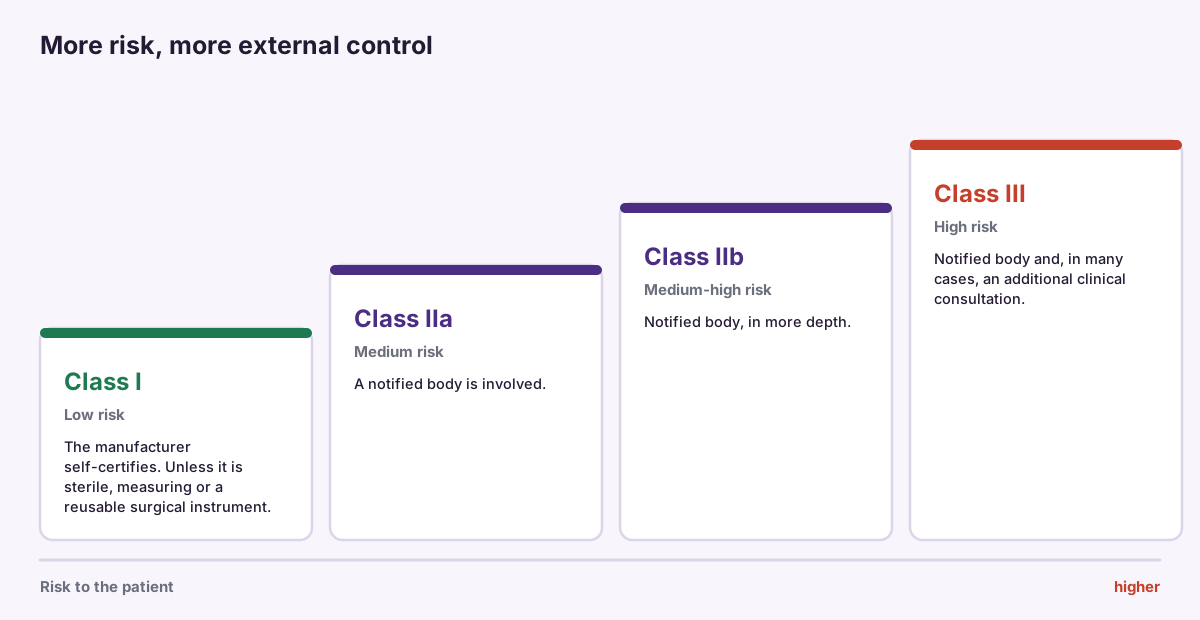
The manufacturer determines the class by applying the rules in Annex VIII of the MDR, based on the duration of contact, whether the device is invasive, where it acts and what can happen if it fails. It is not a marketing label: it determines which assessment procedure must be followed and therefore how much external review lies behind the product.
A detail that surprises many opticians, orthopaedic suppliers and clinics: class I has subcategories. A class I device sold sterile (Is), with a measuring function (Im) or that is a reusable surgical instrument (Ir) does need a notified body, though only for that specific aspect.
What you have to check yourself
This is where CE marking stops being the manufacturer's business and becomes yours. If you distribute medical devices (and many pharmacies, orthopaedic suppliers, opticians and clinics do without calling it that), article 14 of the MDR gives you verification obligations of your own before making products available.
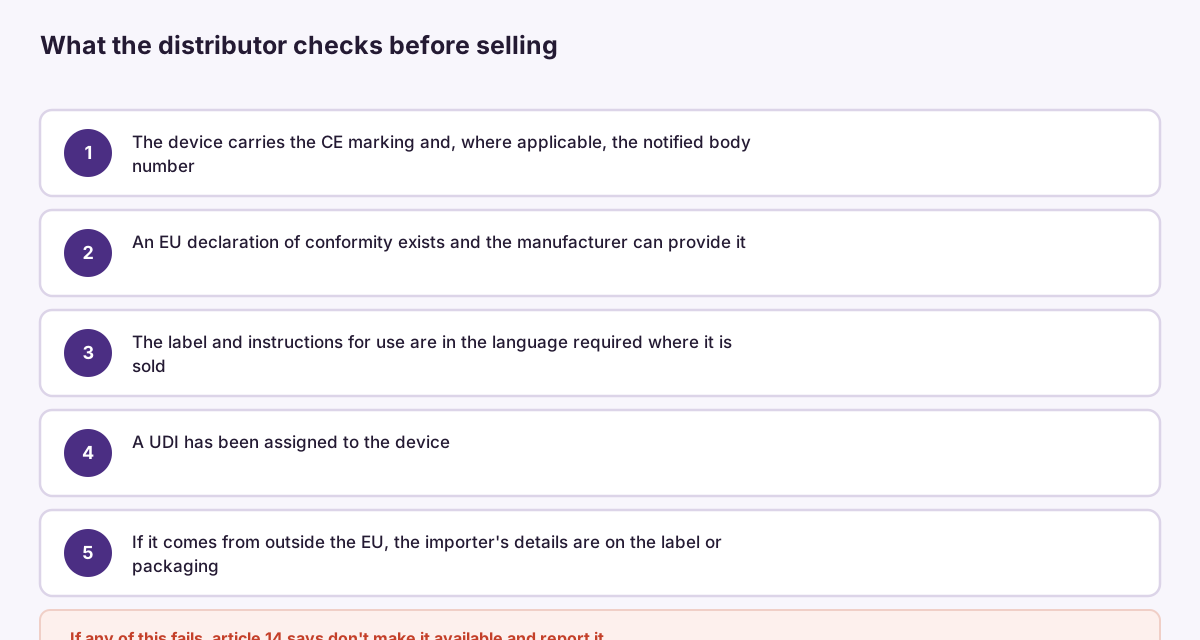
It is not about auditing the manufacturer. It is about looking at five things that are in plain sight, keeping a record that you looked, and knowing what to do if one of them fails. We go into more detail in what article 14 requires if you run a pharmacy and in the six documents an inspector asks for.
Three misunderstandings that come up every week
"It's CE marked, so it's certified." The CE marking on a toy, on a machine and on a medical device mean different things. All they say is that the manufacturer declares compliance with the EU legislation that applies to it.
"It's a medical device because we sell it in the pharmacy." The criterion is the intended purpose the manufacturer gives it, not where it is sold. The same object can be a medical device or not, depending on what the manufacturer says it is for.
"The supplier is European, so I'm not an importer." If the product enters the Union through you, you are an importer with the additional obligations of article 13, even if your supplier has an office in your country.

What you should keep on file
For every medical device product line you handle: the EU declaration of conformity, the notified body certificate where there is one, the record with the class and the UDI, and the manufacturer's and importer's details. Filed and easy to find, not in an email from two years ago.
That file is, quite literally, what is asked for when the inspection arrives.